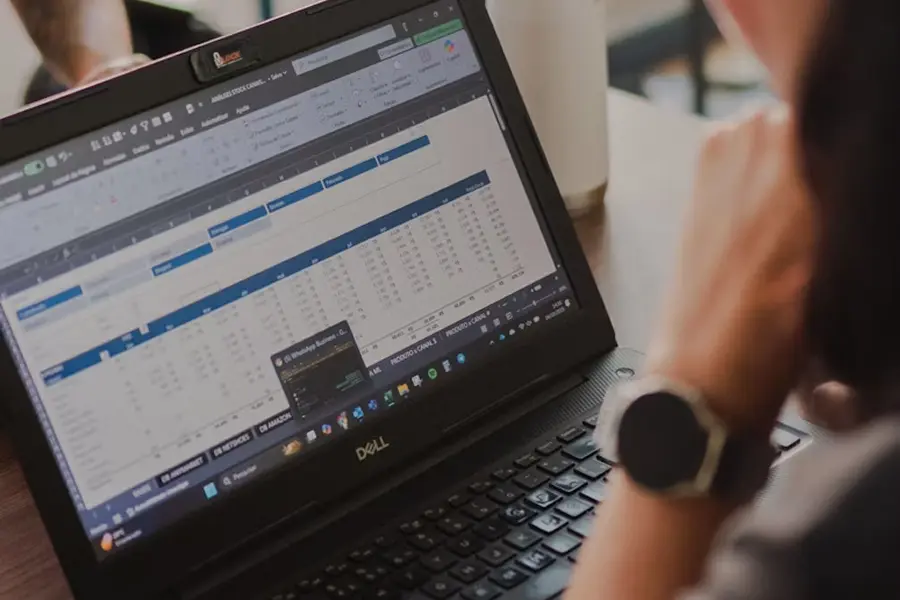
Spreadsheets are useful for organizing information, performing calculations, and testing new processes. For many businesses, they are also familiar, flexible, and inexpensive.
The problem begins when spreadsheets stop being tools and quietly become the operating system of the company.
A growing business may depend on spreadsheets to prepare quotes, manage schedules, track jobs, calculate commissions, monitor inventory, forecast revenue, or report profitability. Employees may spend hours copying information between files, checking formulas, updating versions, and reconciling numbers that should already agree.
Because there is no large software invoice attached to this work, spreadsheet dependence can appear inexpensive. In reality, the costs are simply distributed across payroll, delays, mistakes, missed opportunities, and poor decisions.
The true cost of running a growing business on spreadsheets is often much higher than leadership realizes.
Spreadsheets Create Hidden Labor Costs
The most immediate cost is employee time.
Consider how much work may be required to maintain a spreadsheet-based process:
- Entering the same customer or job information into multiple files
- Copying numbers from emails, accounting systems, and other applications
- Checking whether formulas are still correct
- Comparing different versions of the same spreadsheet
- Following up with employees for missing updates
- Reformatting information for management reports
- Correcting rows that were deleted, overwritten, or entered incorrectly
Each task may only take a few minutes. Across multiple employees, projects, departments, and weeks, those minutes become a substantial labor expense.
This work also tends to increase as the business grows. More customers create more records. More employees create more versions. More services create more exceptions. More locations create more reporting requirements.
The company may respond by hiring additional administrative staff, even though the real problem is not insufficient staffing. It is a process that requires too much manual effort.
Employees who should be serving customers, managing projects, analyzing performance, or generating revenue instead spend part of each day maintaining spreadsheets.
Small Errors Can Produce Expensive Consequences
Spreadsheets are highly dependent on accurate manual entry and careful maintenance.
A single mistake can affect an entire calculation. A copied formula may reference the wrong cell. A row may be excluded from a total. A price may not be updated. An employee may overwrite a value without realizing that another department depends on it.
These errors are especially difficult to identify because the spreadsheet may still look correct.
The file opens. The formulas calculate. The totals appear precise. Yet the underlying information may be incomplete or inaccurate.
In a growing business, spreadsheet errors can affect:
- Estimates and customer pricing
- Job-cost calculations
- Inventory availability
- Employee commissions
- Production schedules
- Project deadlines
- Revenue forecasts
- Management reports
- Invoices and payments
An incorrect quote can reduce the profit earned on a job. An outdated inventory count can delay production. A missed line item can postpone billing. An inaccurate forecast can cause leadership to make a hiring or purchasing decision based on revenue that may not materialize.
The cost is not limited to correcting the spreadsheet. The company must also absorb the operational consequences created by the error.
Duplicate Work Becomes Part of the Process
Spreadsheet-based businesses frequently enter the same information more than once.
A salesperson may enter customer details into a quoting spreadsheet. An operations employee may reenter the information into a scheduling file. Accounting may type it again when creating an invoice. Management may copy the numbers into a separate reporting workbook.
This duplication creates unnecessary work and increases the likelihood of inconsistency.
The customer name may be spelled differently across files. The project amount may be updated in one spreadsheet but not another. Operations may work from an older scope while accounting bills from the latest version.
Each department may believe its information is correct, but there is no dependable single source of truth.
Employees then spend additional time reconciling the differences. Meetings become focused on deciding which number is accurate rather than discussing what the number means.
As the organization grows, this problem becomes harder to control. New employees create new files. Departments develop their own processes. Managers build separate reports to compensate for information they cannot obtain from existing systems.
Eventually, the business may have dozens of spreadsheets containing overlapping versions of the same operational data.
Reporting Becomes Slow and Reactive
Leadership needs timely information to manage a growing company.
Executives may need to know:
- Which jobs are profitable
- Which projects are falling behind
- How much work is currently in progress
- Which invoices have not been sent
- Whether labor costs are increasing
- Which customers or services generate the strongest margins
- Whether the company has enough capacity to accept additional work
When this information is stored across spreadsheets, creating a report often requires several manual steps.
Employees must collect files, request updates, verify the information, remove duplicates, correct formatting, and combine the results. By the time the report is complete, the data may already be outdated.
This creates a reporting cycle in which leadership is always looking backward.
A monthly report may explain what happened several weeks ago, but it may arrive too late to prevent the problem from becoming larger. A project that was losing money may already be complete. An invoicing delay may already have affected cash flow. A scheduling conflict may already have disrupted the customer.
Good reporting should help the company act earlier. Spreadsheet-based reporting often documents problems after the opportunity to intervene has passed.
Outdated Information Leads to Outdated Decisions
A spreadsheet only reflects the information that has been entered into it.
If an employee has not updated a project status, management may assume the work is still on schedule. If purchasing has not entered a price change, an estimate may use an outdated cost. If accounting has not updated a payment, a customer may appear delinquent when the invoice has already been paid.
The issue is not that employees are careless. They may be busy, working from the field, serving customers, or managing other responsibilities. Updating a spreadsheet may be one more manual task competing for their attention.
As a result, business decisions are often made using information that is several hours, days, or weeks old.
Leadership may approve overtime based on an inaccurate schedule. A salesperson may promise a delivery date without seeing the current workload. A manager may purchase materials that another employee has already ordered. The company may delay hiring because the latest revenue information has not been consolidated.
In a fast-moving business, old information can be nearly as dangerous as incorrect information.
Spreadsheet Dependence Creates Key-Person Risk
Many spreadsheet processes depend heavily on the person who created them.
That employee may understand which tabs matter, where the data comes from, which formulas are fragile, what must be updated manually, and how to correct problems when the workbook stops working.
The spreadsheet may contain years of accumulated business logic that has never been formally documented.
When that employee is unavailable, takes another position, or leaves the company, the business may struggle to operate the process.
Other employees can open the file, but they may not understand how it works. Management may discover that an important quoting, scheduling, or reporting process depends on knowledge held by one person.
This is not merely an information technology problem. It is an operational continuity risk.
Signs Your Business Has Outgrown Spreadsheets
Using spreadsheets does not automatically mean a business needs new software. The concern is how the spreadsheets are being used.
A company may have outgrown its current process when:
- Multiple employees edit separate versions of the same file
- Information must be copied between spreadsheets and business applications
- Reports require hours or days of manual preparation
- Employees regularly ask which version is current
- Leadership does not trust the numbers without additional verification
- Important processes depend on one employee’s knowledge
- Errors are discovered after quotes, orders, or invoices have already been issued
- Customers experience delays because internal information is difficult to locate
- The business hires people primarily to keep up with administrative data entry
- Management cannot easily see current performance across the organization
These symptoms often appear gradually. Each workaround may seem manageable on its own. Together, however, they can prevent the business from scaling efficiently.
Moving Beyond Spreadsheets Does Not Require Replacing Everything at Once
Businesses often delay improving spreadsheet-based processes because they assume the only alternative is a large, disruptive software replacement.
That does not have to be the case.
A better approach is to begin with the process creating the greatest operational cost.
For example, the company might first improve quoting, job tracking, scheduling, inventory management, or reporting. The initial software can centralize the most important information, automate repetitive steps, and connect with applications the company already uses.
This phased approach allows the business to solve a specific problem, measure the result, and expand the system based on actual operational needs.
Before making a change, leadership should identify measurable baseline information such as:
- Hours spent entering or reconciling data
- Time required to prepare reports
- Number of corrections or rework incidents
- Average quote turnaround time
- Time between job completion and invoicing
- Frequency of scheduling conflicts
- Cost of administrative labor
- Revenue lost through delays or missed follow-up
These measurements help the business determine whether the new process is producing a meaningful return.
The Most Expensive Spreadsheet May Be the One That Appears Free
Spreadsheets rarely appear as a major line item in the company budget.
Their cost is hidden inside everyday operations.
It appears in the employee who spends Friday afternoon preparing a report. It appears in the quote that used an outdated material price. It appears in the invoice that was sent two weeks late. It appears in the meeting where three departments arrive with three different numbers.
For a small business, those costs may initially be manageable. For a growing business, they multiply.
The question is not whether spreadsheets are useful. They are.
The question is whether they are still the right foundation for the processes the company depends on every day.
RentMySoftware.com helps businesses replace high-cost manual processes with custom software that fits the way they actually operate. By renting rather than purchasing a large custom system upfront, businesses can begin with the capabilities they need most and expand as their requirements evolve.
The goal is not simply to eliminate spreadsheets.
The goal is to reduce unnecessary labor, improve accuracy, provide timely information, and give the business a stronger foundation for growth.